

Električni i elektronski otpad je jedna od kategorija otpada koja se dijeli u deset razreda. Razredi e-otpada sadrže vrijedne, a u pojedinim komponentama opasne hemijske supstance koje su kancerogene, izazivaju različita oboljenja i zagađenja ukoliko se ne odlažu pravilno. Svrha pravilnog odlaganja je da se obezbijedi "čist" otpad za ručnu ili mehaničku obradu, a zatim i reciklažu.
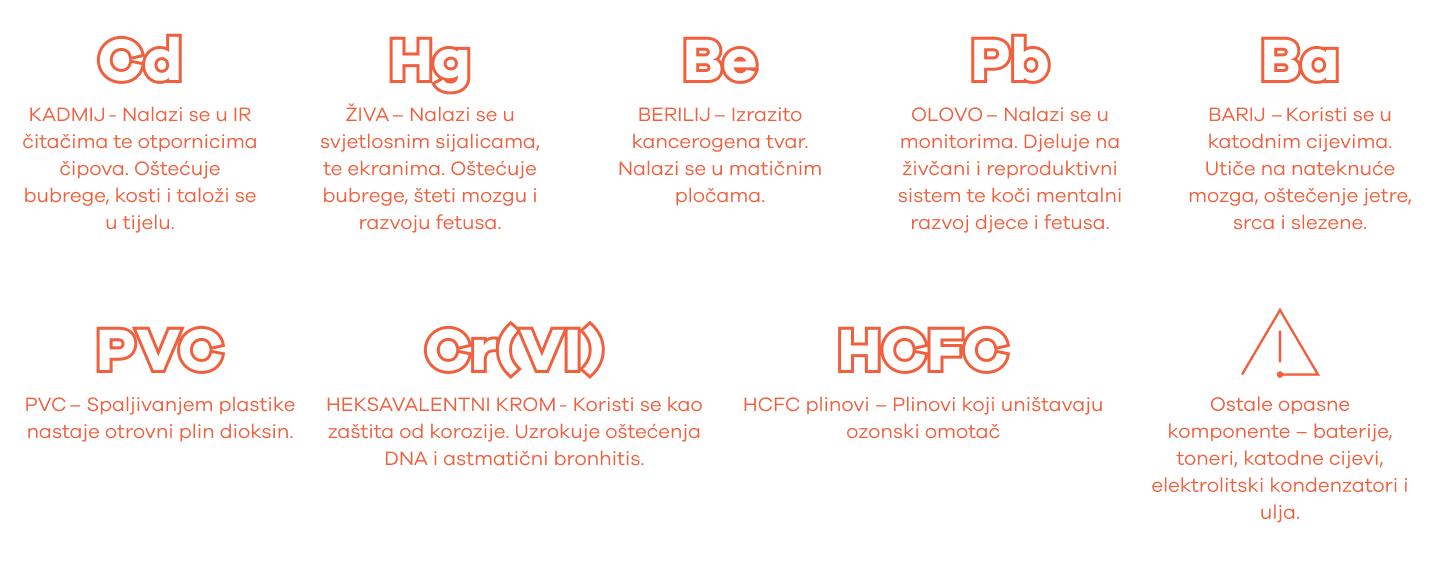
E-otpad prema klasifikaciji spada u opasni otpad te sadrži mnoge štetne tvari za zdravlje ljudi i okoliš, poput: žive, kadmija, kroma, broma, olova, arsena, azbesta, spojeva silicija, berilija, fosfora itd. S obzirom da se električni i elektronski uređaji sve više koriste ovi hemijski elementi i spojevi vrlo često dolaze u kontakt sa čovjekom, te izazivaju različite vrste oboljenja.
Opasne supstance i komponente u električnom i elektronskom otpadu:
Želiš da pravilno recikliraš e-otpad? Klikni ovdje
Rezultat pravilnog odlaganja električnog i elektronskog otpada je reciklaža i stvaranje radnih mjesta u reciklažnom sektoru, a u konačnici čista okolina bez zagađenja i bolesti.
Recikliranje/reciklaža znači ponovno procesiranje otpadnog materijala u proizvodnom postupku za izvorne ili druge svrhe, ali se pritom isključuje energetska prerada koja predstavlja upotrebu gorivog otpada za proizvodnju energije izravnim spaljivanjem zajedno s drugim otpadom ili bez njega, ali uz obnavljanje topline.